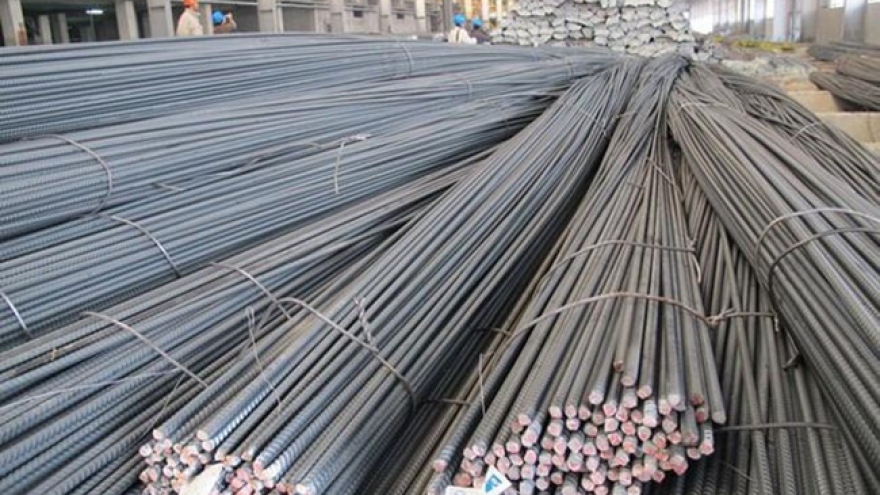
It is now more difficult to export steel |
However, these might not be the only risks. Analysts have warned that protectionism has bounced back not only in the US and Europe.
Therefore, Vietnamese enterprises need to re-set their investment directions, restructure product lines and reorganize the markets to exist in the long term.Nguyen Van Sua, deputy chair of the Vietnam Steel Association (VSA), said in the face of the strong rise of the protectionism which will be stronger in the future, Vietnamese steel manufacturers need to improve their competitiveness by utilizing modern technologies to create high-quality products at reasonable prices.He also emphasize the need for new markets to ease the reliance on certain markets. To offset the decline in the exports, manufacturers have been advised to preserve the domestic market at any cost.An analyst also said the domestic market has a lot of potential. But this is a fierce battlefield as local manufacturers have to compete with imports which have been increasing.A report showed that 1.5 million tons of galvanized and color coated iron sheet were imported to Vietnam in 2017.However, manufacturers would find it difficult to preserve the domestic market without trade remedies that restrict imports. Though Vietnam’s agencies have been setting up a legal framework to protect domestic production, there are still loopholes through which imports can penetrate the domestic market.Vietnam’s average steel consumption per capita is 200 kilograms per head per annum, a low level compared with other countries. Steel manufacturers can export 20% of their output, while the remaining 80% is consumed domestically.